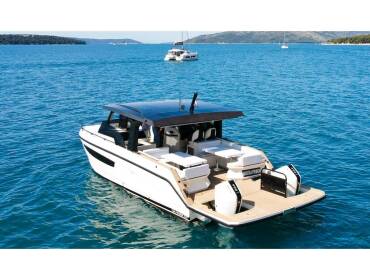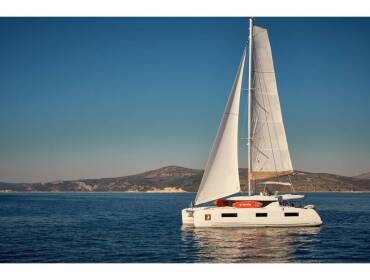



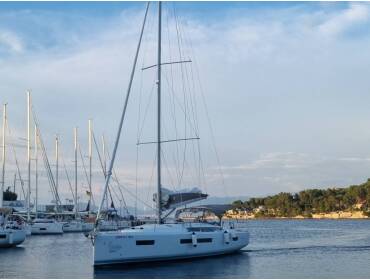
Adriatic Sea:
The Adriatic Sea stretches
north-west - south-east, and comprises the area between the Balkan
and Apennine peninsula (783 km). The average width of the Adriatic
amounts to 170 km.
When to visit
Croatia:
The best period for a stay on
the Croatian coast is between April and October. Summer
temperatures can even reach 38°C, whereas the sea temperature
amounts to pleasant 26°C during the summer period. High season
(July and August) offers lots of fun, entertainment and excitement
to guests eager for such a holiday, whereas the diversity of the
Croatian coast also offers many peaceful and quiet places for
guests looking for a rest far away from the loud music of the disco
clubs. March is accompanied by the spring sun, as well as an
occasional shower, whereas the early autumn, i.e. September and
October, are ideal for people eager to have some rest. In the off
season beaches are no longer crowded, and the weather remains
stable and the sea temperature pleasant. In the winter period be
sure to bring warm clothes regardless of the mild Mediterranean
climate. Although the temperature never reaches 0°C, the wind can
be quite unpleasant.
In case you are interested in our special offers and sailing
opportunities in specific regions of Adriatic sea, please visit our
dedicated websites A Yacht Charter
Split, A Yacht Charter
Zadar or A Yacht
Charter Dubrovnik, respectively.
If you are looking for a great
selection of places to stay with discount prices, visit Hotel
Reservation in Zagreb for more information.
Depths
The shallowest part of the
Croatian Adriatic is in Istria, where the depth does not exceed 50
metres. From Pula, the seabed is mildly lowering, making a long,
narrow valley which extends from Zirje towards Italy and is called
"Jabucka kotlina". The largest depth there is around 240 metres.
From "Jabucka kotlina", the seabed is rising to Palagruza reef,
where the largest depth amounts to 130 metres. Towards the south,
the seabed is again steeply lowering towards the South-Adriatic
valley, where the largest depth measured is around 1,300
metres.
Tides
The tidal movements of the
Adriatic are of relatively small amplitudes. In the southern part,
the difference rarely exceeds some forty centimetres, whereas in
the northern part it is somewhat bigger, so that it amounts to 1
metre in Istria and the Gulf of Trieste. In some narrow channels
and bays, the high tide can rise considerably during a strong
north-eastern wind ("Bura"). This phenomenon is characteristic for
big and deep bays of the southern Adriatic. The tides are of a
mixed type, which means that their rhythm is semidiurnal during the
new and full moon, and diurnal during the first and the last
quarter. Their amplitudes are quite irregular.
Sea currents
Sea currents occur under the
influence of winds, the differences in pressure, temperature, and
salinity. Currents of the Adriatic can hardly be noticed. The speed
of currents changes in particular areas, but it also depends on
time periods. The average current speed amounts to around 0.5
knots, but they can also reach the speed of 4 knots.
Salinity
The average salinity of the
Adriatic Sea is 38.30 per mill. In the northern part, the salinity
is somewhat lower than in the central and southern part due to the
influence of the River Po.
Sea temperature
The Adriatic Sea has a very
noticeable annual change of the surface sea temperature. The
average annual temperature is 11°C. During the winter time, the sea
is the coldest and the surface temperature amounts to around 7°C.
In the spring time, the sea gets warmer, and the surface
temperature rises to 18°C. In the summer time the surface of the
sea reaches quite a high temperature of 22 to 25°C, and in the
southern Adriatic and Istria even up to 27°C.
Waves in the
Adriatic
Waves occur primarily as a
consequence of the blowing of winds. The farther the reach, i.e.
the surface across which the wind blows, the higher the waves tend
to be. Their strength depends on the configuration and exposure of
the coast. Most often, the heights of waves in the Adriatic range
between 0.5 and 1.5 metres, and very rarely exceed 5
metres.
Climate
The climate is Mediterranean,
with mild, rainy winters, and hot, dry summers. The average
temperature in the winter time ranges between 5°C and 10°C, and in
the summer time between 26°C and 30°C. The sea temperature amounts
to around 12°C in February and 25°C in August.
Winds
Basic winds of the Adriatic are
the following: "Bura" (bora - north-eastern wind), "Maestral"
(landward breeze - north-western wind), "Jugo" (sirocco -
south-eastern wind) and "Nevera" (strong western
wind).
Furthermore: "Libecco" (from the
direction of south-west), "Levantera" (from east) and "Tramontana"
(from north). At stable high air pressure, winds from the mainland
usually blow during the night, and from the direction of sea during
the day.
Information about weather in
the Adriatic
Coastal radio stations broadcast
information about weather as well as weather forecast for the
following 24 hours on a daily basis in Croatian and
English:
| Radio Rijeka |
VHF channel 24 |
05,35h, 14,35h,
19,35h |
| Radio Split |
VHF channels 07, 21, 23,
81 |
05,45h, 12,45h,
19,45h |
| Radio Dubrovnik |
VHF channels 07, 04 |
06,25h, 13,20h,
21,20h |
Constant weather forecasts on
VHF - transmitters
Weather forecasts for the area
of Croatian coastal waters are broadcast in Croatian, English,
Italian and German every 10 minutes, and are being updated at
07,00h, 13,00h and 19,00h (local time). They include a situation
overview, short weather forecast for the following 24 hours and air
pressure information.
Broadcasting is on the following
channels:
VHF-channel 73 for the northern
Adriatic / western part of Istria
VHF-channel 69 for the northern
Adriatic / eastern part
VHF-channel 67 for the central
Adriatic / eastern part
VHF-channel 73 for the southern
Adriatic / eastern part